
Alkaline water is popular with adults, and many bottled brands promise better hydration and other health benefits. So it’s natural to wonder whether it’s good for your baby or child too. Here’s what paediatric guidance says.
What is alkaline water?
Alkaline water has a higher pH than ordinary drinking water, usually around 8 to 9.5. It’s sold bottled or made at home with an ionizer machine. Some ionizers also produce water at very high or very low pH for cleaning. That water is not for drinking, by anyone.
The health claims made for alkaline water, such as “balancing” the body’s pH, boosting immunity or protecting the kidneys, are not supported by good evidence. Your body keeps its blood pH within a tight range on its own, whatever you drink.
Babies under 6 months: no water at all
Babies under 6 months don’t need any water, alkaline or plain. Breast milk or formula gives them all the fluid they need, even in hot weather. Giving young babies water can fill their small stomachs, reduce how much milk they take, and in large amounts upset the balance of salts in their blood.
Formula tip: always make up formula with safe drinking water exactly as the instructions say. Don’t use alkaline or mineral-enhanced water, as it can change the formula’s carefully measured mineral content. If you’re unsure which water to use where you live, ask your paediatrician.
Babies 6 to 12 months: a little plain water
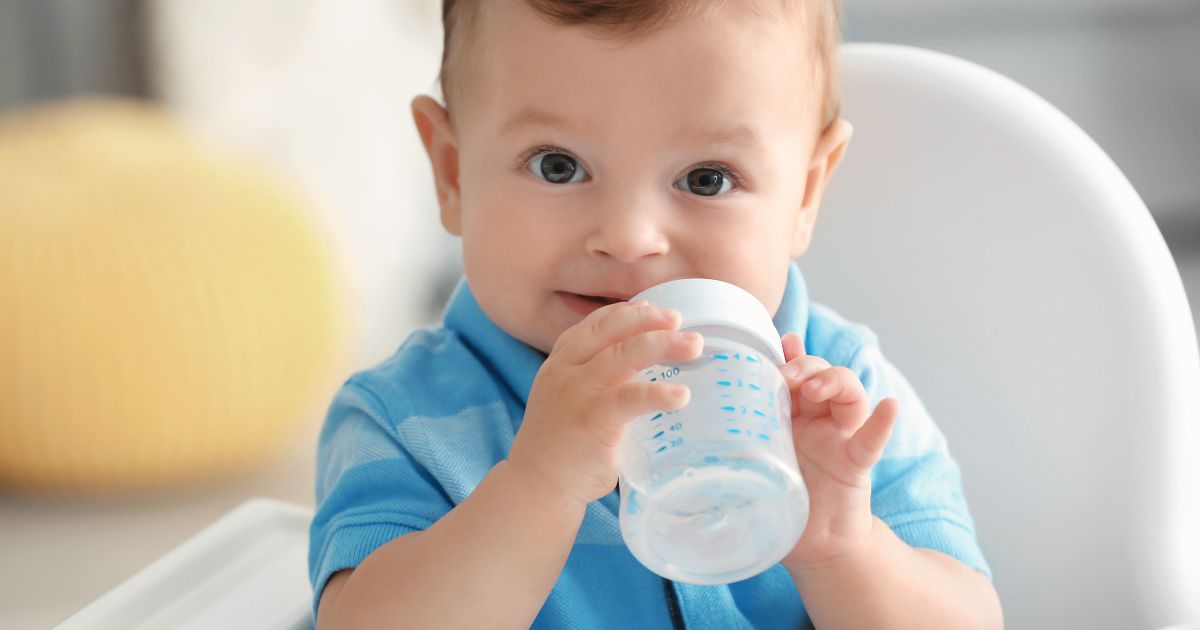
Around 6 months, when your baby starts solid foods, you can offer small amounts of plain water. The American Academy of Pediatrics suggests about 120–240 ml (4–8 oz) a day in total, in an open cup at mealtimes. Breast milk or formula is still their main drink.
There’s no need for alkaline water at this age, and no proven benefit.
Toddlers and older children
After their first birthday, water becomes your child’s main drink alongside milk. As a guide, children aged 1–3 need about 4 cups of fluids a day, including water and milk, and older children need more.
For healthy children over one, drinking alkaline water in normal amounts is unlikely to cause harm, but it offers no proven advantage over plain water. If your child has a kidney condition or takes regular medication, check with their doctor first.
The bottom line
- Under 6 months: breast milk or formula only, no water.
- 6–12 months: small sips of plain water with meals.
- Over 1 year: plain water is the best drink. Alkaline water isn’t needed.
- Never use alkaline water to make up formula.
Planning for your baby’s health from day one
Many parents look for ways to protect their child’s health from the very start. One decision you can only make at birth is whether to save your baby’s cord blood and cord tissue, rich sources of stem cells. Download our free info pack to learn more.
Frequently asked questions
Can I give my newborn alkaline water?
No. Babies under 6 months don’t need any water. Breast milk or formula gives them all the fluid they need, even in hot weather.
Can I use alkaline water to make baby formula?
No. Use safe drinking water exactly as the formula instructions say. Alkaline or mineral-enhanced water can change the formula’s mineral balance.
How much water should a 6–12 month old drink?
The American Academy of Pediatrics suggests about 120–240 ml (4–8 oz) of plain water a day, offered in an open cup with meals. Breast milk or formula is still the main drink.
Is alkaline water harmful for toddlers?
For healthy children over one, alkaline water in normal amounts is unlikely to cause harm. Check with your doctor if your child has a kidney condition.
Read next: Two Precious Gifts of Birth: Breastfeeding & Cord Blood
This article is for general information and isn’t medical advice. Ask your paediatrician about your child’s needs.
Sources